


I like a project. Always have. If there’s an engine that drives me, it’s making things, fixing things, solving problems. This obsession has financed my life and put two kids through college.
What’s kept it on the rails is the sober reality that making things is hard. It takes time and dedication. You can’t produce an album overnight. You can’t write a novel in a day. You can’t build software in a week.
Except now you can, thanks to AI.
It sucks. It’s brilliant. It will save us. It will destroy everything we love.
Before you dig into your trench or throw up in your mouth, hear me out. I’m not selling anything. If anything, I’m asking questions I can’t answer, and they’ve been plowing the topsoil off my sleep for weeks.
Some quick background so you understand your narrator. I have a music degree. I was a “professional” musician for a few years before I became a father and had to earn a real paycheck. I taught myself how to design and build websites, then program software, then manage teams to build software, then make PowerPoints full of buzzwords and charts showing other people how to teach their people how to build software. It’s all a little silly, but I’ve earned a living.
At 40, I started writing novels and quickly found that, of all the things I’ve created in my life, writing a novel is the most satisfying. You can read more about those books in a post from last year or check out Daedalia, my current serial novel in progress.

Given my day job, it’s easy to understand why I’ve kept a curious eye on AI as it has developed over the past five years. For 20 years before that, we used AI all the time, but we called it “automation.” It did large, boring tasks like moving files from one server to another overnight or recursing through thousands of documents to check for errors so some poor schmo wouldn’t have to wake up at two in the morning. I programmed jobs like this.
When I gave AI a starring role in The Memory of My Shadow, a novel I wrote in 2018 before the magic trick of large language models became public, I was comfortable knowing my subject was science fiction. When I began tinkering with the first release of ChatGPT in November 2022, I understood that the gap between my book and reality was closing fast. I introduced this alien technology, like a toddler with a paint sprayer, to unsuspecting friends and colleagues. It was fun. Silly memes.
Then it started taking away careers.
I never had the desire to have AI write for me. I love writing. Why the hell would I do that? Have it do my laundry, as someone famously said a couple of years back. I avoided AI-generated music for the longest time because I didn’t want to see what it could do. It was too close to home. My first love.
After hearing respected musician and YouTuber Rick Beato share his explorations, disbelief, and dismay about how well AI can execute music, I looked into it. He was right. It’s incredibly good. It’s an incredible mimic. If you have a Spotify account, you’ve probably already fallen for some of it in your “Breezy Sunday Morning Chill with a Latte” playlist. It’s not enough that Spotify pays musicians a fraction of a cent per stream. Now they want to pay them nothing.
There are garbage mills run by slop lords who paid for a weekend seminar to “get rich with AI,” churning out thousands of greasy tomes of word salad packaged as novels and flooding Amazon. Some are even published with ChatGPT conversations still in the text.
None of this is happy news, and I won’t get into the economic and climate repercussions. We can doom spiral quickly, and that’s not why I’m writing this. I want to give you a peek into another wing of the AI haunted mansion. It’s not as sexy as robot bodice-rippers, but it is changing everything overnight.
Music, art, and writing require a beating heart. Software does not.
“Vibe coding” is such a douchy term. The name alone was enough for me to ignore it the first few times it popped up on my radar. But then, at my day job, I was asked to rapidly develop prototypes to test some concepts, so I checked out Claude Code.
Holy shit.
In an afternoon, I was hooked.
But let’s back up. What is vibe coding? It’s a way of generating software using AI. It’s driven by natural language prompts, translating English into Python or C++. But there’s more to it than that. We’ll get there.
I never loved writing code, but it was the only way to build the software that solved the problem that earned the paycheck. Just as there probably aren’t many working carpenters who lament the invention of the nail gun, I don’t suspect most programmers will yearn for the days of writing seven-hundred-line subroutines. The majority of programmers I know have embraced automating code authoring and will never look back.
Why? Because it does a remarkable job in the hands of someone who knows what they’re doing, and it’s fast. Not “a couple of hours” fast. I mean done-before-I-finish-stirring-sugar-into-my-tea fast. And why wouldn’t it be? Unlike art, which is highly subjective, software either works or it doesn’t. It either solves the problem efficiently or it doesn’t get used. LLMs can write software because they’re fluent in its language and have four decades of training material to draw from.
Most days, I have three laptops open: one for my company, one issued by the client I’m working for, and my personal one. I have Claude Code running on one, ChatGPT Codex on another, and Figma Make on the third. I type a few instructions into each, and they generate, improve, or fix features in some new software I’m “writing.”
What I’m really doing is drafting a specification. The LLM generates a plan, I review and adjust it, and then it executes in 20 minutes what might take a team a day. When the LLM produces something I don’t understand, I take screenshots and paste the error into another LLM, which almost always gives me not only the solution but an exact prompt I can paste back into the first one to fix the issue.
If I start three new projects in the morning, it’s entirely reasonable to expect to have three functional MVPs by the end of the day.
That is insane.
Is the software perfect? No. Could it be improved? Absolutely. Does it take a long time to improve? No, but programmers, better than any other profession, understand the power of iteration.
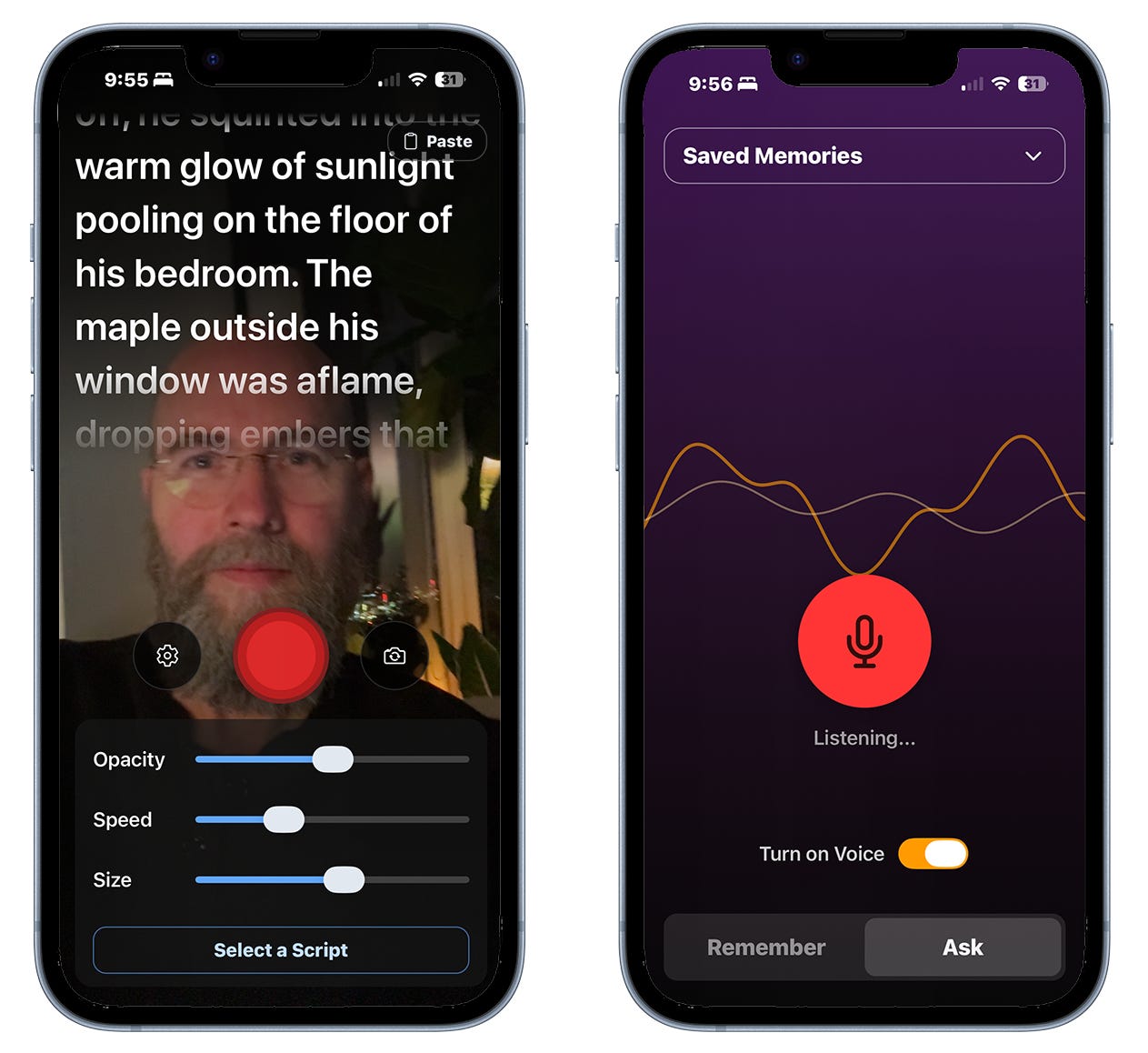
The first experimental app I built was a memory app for elderly folks. I wanted a very simple mobile app my parents could use to push one button and record or retrieve small bits of information like passwords or birthdays. It took two days to build a prototype, but most of that time was spent navigating Apple’s publishing requirements. Astonishingly, the app works as designed. I have no idea if it’s actually useful. That’s a different problem.
A week later, I built a teleprompter app that lets you read a scrolling script on your phone while recording a selfie video. Similar apps range from a few dollars to monthly subscriptions in the App Store. I built a beautifully functional version in a single afternoon of well-written prompts.
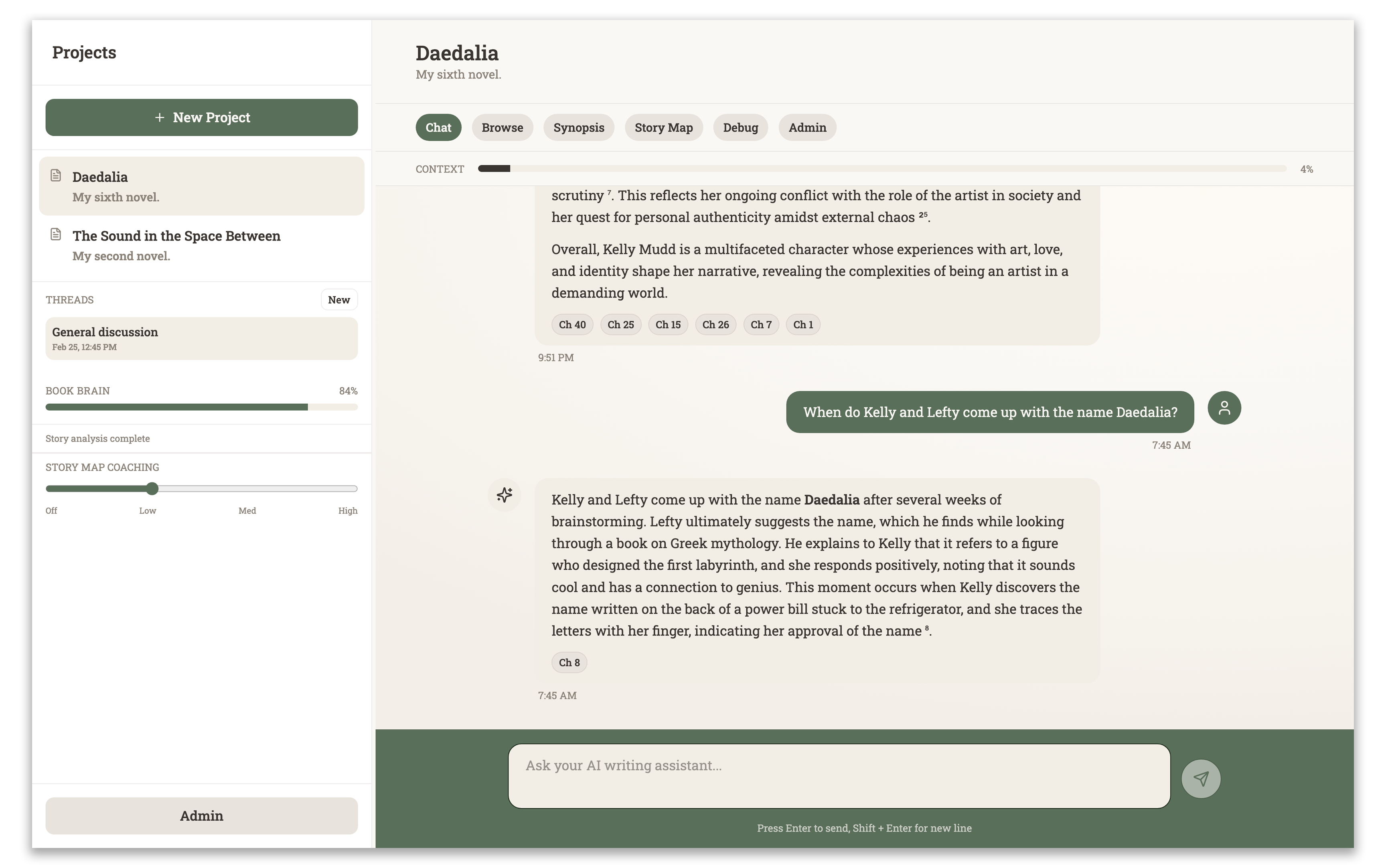
My current personal project is more ambitious. I’m building an editorial assistant that allows a novelist to “talk” with their book and ask questions about events and characters. I hope to enable thoughtful conversations about plot, arc, and theme, though that’s more ambitious and prone to hallucinations. Those hallucinations might even be helpful when you’re stuck and need a wildly ungrounded perspective. Eventually, I may open it to a few writer friends in a closed beta to see if anyone finds it useful.
So what’s eating my brain?
It’s addictive. It’s crack cocaine for someone who loves a project, has hundreds of ideas, and gets a massive dopamine hit from solving a problem. I’m astonished at how quickly I’ve adapted to this workflow in just a few weeks. You issue instructions, it builds something cool, you test it, then refine it. You do this all day, swiveling between computers and projects, and soon your brain doesn’t know how to turn it off. Last night I barely slept because my brain wouldn’t stop generating prompts.
Some of this is probably the contact high of any new technology. But it feels bigger than that because millions of other people are having the same experience.
It’s taken me 56 years to master my quirky operating system. I’ve never been tested, but I suspect I have some mild form of dyslexia. I’m a slow reader. I’m bad with numbers. I have to be methodical and persistent to get good results. I’ve achieved a lot with that faulty system, and none of it would have been possible without thousands of hours of trudging, making mistakes, and starting over.
Vibe-coding is equivalent to teleportation.
The gap between idea and solution has completely collapsed.
There is no bridge of sorrows where ideas fall off before reaching the other side. I can’t help but wonder what this will do to my operating system, what it’s already doing, and what it will do to the larger world when everyone is doing what I’m doing right now.
It’s become cliché to compare the AI age to electricity or the industrial revolution, but this feels different. It’s conceivable that a 20-year-old carpenter on a job site has never had to swing a hammer to frame a wall, though she could probably figure it out quickly. Ten years from now, will a 20-year-old knowledge worker know how to think critically, defend an argument, or create something entirely from their own brain?
Forget the economy for a moment. What will humans do with our brains when nearly every hard thing can be delegated? What shape will our children’s brains take under the tutelage of AI? What will their work look like?
I wish I had answers. I don’t. I’m still trying to understand how this new magic is working on me.
I don’t feel the same as I did six months ago.
Raising hand to be a beta tester of your "Talk to Your Book" program... 🖐️
My husband also started to "play" with creating small scripts that help in his work and he also "created" an workout app for his phone that works exactly for his needs... I frown a little at this but then... I guess it's inevitable. And I think that as long as we use it as a tool - like your carpenter uses their nail-gun - then maybe it's ok?
In all honesty, I don't know. What if we start trusting it too much? What if we take its word for the truth and aren't able to tell hallucinations from facts?
Also, it's pretty hard to misuse a nail-gun but AI is already being misused in ways that are pretty horrifying... Although, having said that, when I was volunteering at the wild life rescue center we received a hawk with a nail through its head (it survived by the way, amazingly) so maybe we shouldn't blame the tool but the hands it falls into?
I don't know. I'm all questions and no answers...
In an ideal world, I don't think there would be reason to fear AI because it would be used to cure diseases and make everyone's life better. But our world is far from ideal, so I have to say I am not optimistic.
It's really interesting to have your point of view, though.
And as much as I loved reading A Memory of My Shadow... Let's hope it doesn't come to that🙃