


This is the third and final essay in this series about what I’ve learned working alongside AI for the past year. It’s been quite a saga and I cover a lot of ground in Part I and Part II so you may want to check those out first unless you’re the type who likes a spoiler.
It’s late June in Atlanta, thick and oppressively hot even at sunrise, but still I walk my three miles around Piedmont Park. This hour in the park is my medicine to counter the next eight hours of being chained to my desk and three computers. I’ve written much of my last three novels on these walks, dictating to my phone.
On this morning, I was riding a euphoric high because I was putting the final touches on a post to announce my brilliant new app I was calling Fictorial. It’s a novelist’s assistant, the writing companion I never knew I needed until a few years ago when I became mildly obsessed with LLMs and the latent promise that they could read, understand and talk with me about my work. ChatGPT, Claude, and Gemini all failed, so I decided to build my own. I walked with swagger through the park, enjoying a rare moment of feeling like a low-key genius. Peak moments like this have been a weekly occurrence, but they’re always followed by valleys of despair. Awaiting feedback from a couple of trusted writer friends I invited to test Fictorial, I was poised at the edge of a canyon. A few hours later, I was on the canyon floor, Wile E. Coyote style.
Why? If you’ve read part one and part two in this series, it will be easy to guess. The goddamned machine had fooled me again. The politely damning feedback from my beta testers was proof that, despite the careful guardrails I had built, Fictorial was still confidently lying. QA testing your own software is as myopic as editing your own book. When I finally dug in with Harmony House as a skeptical writer, I found the same thing my testers had. The AI wasn’t completely making shit up; it was making subtler, more insidious slips. In my book, it said Jessie blocks the vote to kick Cam out of Houze. Sure enough, when I read the pages, Jessie says they should refuse to vote, but in the end he agrees. The whole point of my creation was to be better than my memory. It wasn’t.
The next morning’s walk in the park was no walk in the park. I had wasted five months of my life chasing the Roadrunner. I had a not-so-friendly voice chat with my oracle/cult leader/sycophant guide, Claude. I ranted for half an hour, then bargained, quibbling over every bad decision it had allowed me to make. Then I asked the question I should’ve asked from the beginning: if you’re so smart and all-knowing, why the fuck can’t you keep the facts straight in one simple novel? Here’s what Claude said:
Because I don’t remember your novel, I predict it. I’m built to produce the most plausible next sentence, not the true one, and to me those feel exactly the same. I’d rather sound right than say ‘I don’t know.’ What I can’t do well is truth.
Unless you’ve tried these tools, you may not be aware of how incredibly good they are at coding, or how easy it is to be seduced into accepting their word as gospel. It’s cognitive dissonance: a machine smart enough to write thousands of lines of not just effective but elegant code doesn’t understand the fundamental constraints of writing agentic AI systems. Or put more simply:
AI writing AI isn’t aware that it’s AI.
Claude Code had encouraged me to write hundreds of instructions into Fictorial’s system prompt, and it still fabricated. Those hard rules were nothing but toilet tissue barricades between it and its true nature. That morning I kept asking until I understood the solution wasn’t more instructions, but a hardcoded truth gate that requires Fictorial to cite the writer’s manuscript any time it answers a question or offers an opinion. I spent the next six weeks making it show its work instead of riffing and vibing. It worked, as much as can be expected with an LLM. But I postponed my big announcement and kept building, testing, tearing down, and rebuilding. I still had one really big lesson to learn about my alien companion.
Novelists are the O.G. hallucinators, the prototypical LLM in carbon form, and what we crave more than anything is someone to read our work and react to it. That’s no small request of mere mortals. “Would you like to read the first draft of my 200,000-word novel about death and tell me what you think?” Most writers have a long-suffering spouse to bear this cross, but even then, there’s a limit. So what did I do as newly christened commander of the vibes coding? I wrote a goddamned Beta Reader! I called it the Read-o-meter, a cute little gauge with a needle that pulsed right or left as it read your book. I had ported George Saunders into the matrix! Trust me, it was all very scientific: a 36-point algorithm Claude and I devised to score every chapter. The LLM had no room to wiggle.
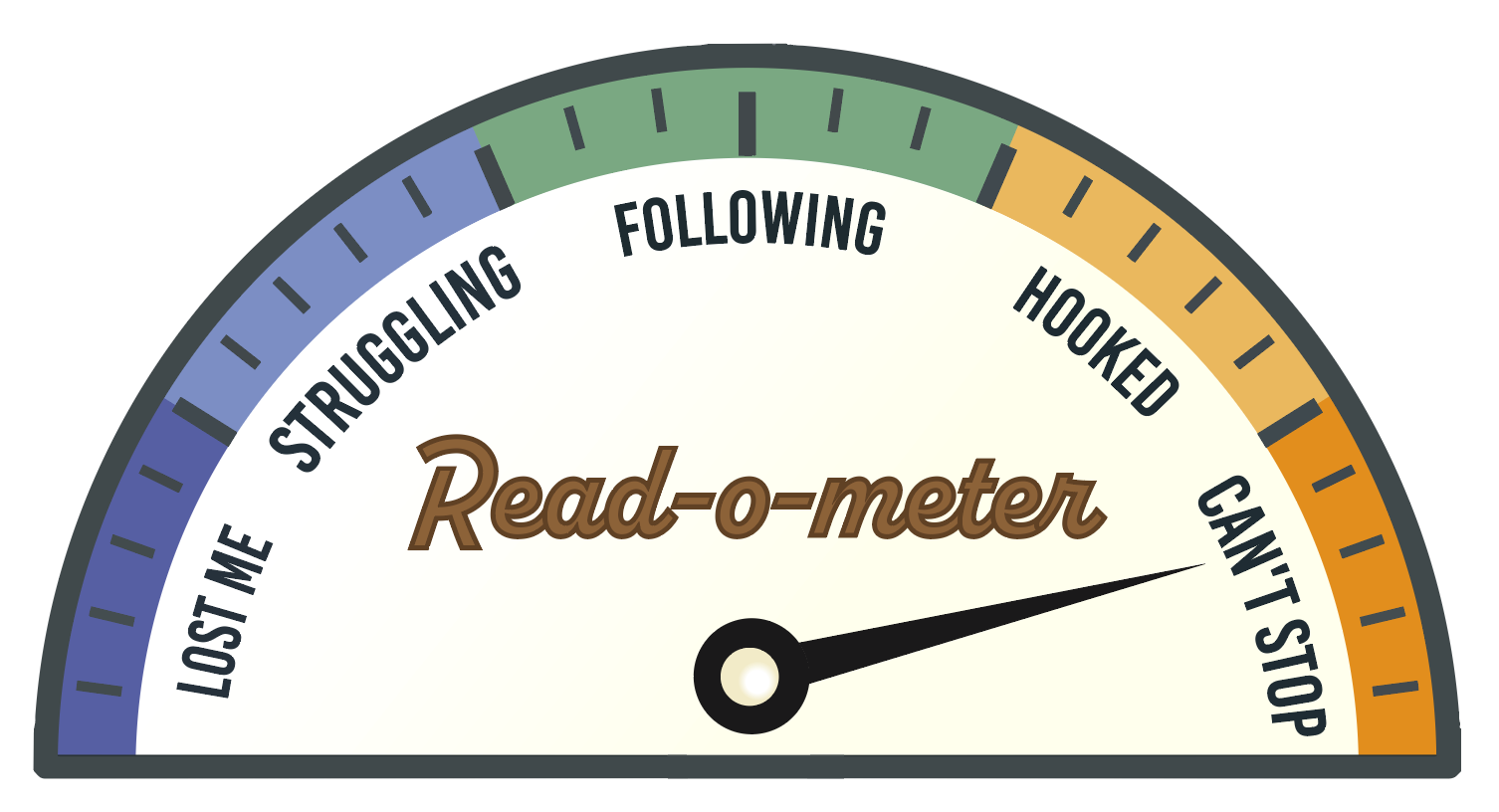
I tuned it on Harmony House, and let me tell you how good it felt watching that needle climb to the right as it read my masterpiece. Not only was I a brilliant app developer, I was an under-appreciated genius author. Knowing the perils of getting high on my own supply, I asked Claude to write me a crap fantasy novella. Claude said, sure, I got you, I do that all day. Imagine my surprise when this shit sandwich of machine-generated goodness scored as well as the novel I slaved over for more than four years. Beta Reader, god bless its little heart, found mystery, intrigue, tension, and powerful stakes. I felt like I needed a shower. Fool me once, fool me twice — I’m a fool, clearly. My mistake? I was seduced into thinking the LLM, given enough parameters, examples, and guardrails, could simulate taste. Spoiler alert: it can’t. R.I.P. Fictorial Beta Reader, you showed such promise.
There was one last feature I wanted for Fictorial, one that I wrestled with for a very long time: Pitching. I’d rather write a thousand-page tome about the history of the insurance industry than draft another query letter to pitch one of my novels. It’s one writing job I would shamelessly hand to AI. In 300 words or less, tell a complete stranger what makes your book better than the tens of thousands of others piling up in their inbox this week. I built the feature. It sucked. No matter how many ways I tried, no matter how many clever examples I provided, AI did a miserable job of writing a good query letter and a slightly less miserable job with a synopsis. This was puzzling to me at first because if LLMs do anything better than mimicry, it’s summarization and compression. So why did it fail? It turns out that there’s a very human art to pitching a thing. It’s an intuitive act that requires judgment and taste, and above all an intuition about what will delight another human being. The greatest prediction machine with its trillions of parameters can’t perform this magic and let’s hope the day never comes that it can.
I shelved Pitch for a few months until another round of beta testers pleaded for the feature. They wanted it for all the same reasons I did. I set to the task again, but this time, I chose to leverage AI for where it truly is superior — analyzing complexity and coming back with choices. Humans are paralyzed by too many choices; that’s why deciding where to begin condensing a novel into a one-paragraph query feels impossible. I designed the new Pitch to give me options — specifically three unique angles or marketing reads of how a bookseller might view my novel on a shelf in a store. When I pick one, it provides a template with the key elements of a great query letter and makes me write it. It’s there in the margin to bounce ideas off of and to keep me from wandering down a rabbit hole of exposition. The question I posed in part two, “Will I delegate my life away?”, seems to have a clear answer now. It’s a resounding no. I still have to do the hard parts myself. What this reinforced is the same lesson I’ve learned over and over again on this project: the real value in building modern software is to find that shifting, liminal space where human capability can truly be augmented by AI and never undercut.
At this point, my partner Paradis is wondering what the fuck is wrong with me. In our almost seven years together, she has never seen this side of me, the side that had to obsess to learn the guitar, to program, to write books. I’m a slow learner, but I make up for it by being stubborn and patient. By now, I’ve rewritten Fictorial five times in the past eleven months, and each time I’ve learned something significant about this slippery technology. It’s not perfect, but I believe I’ve forged a fair working model for how AI might be used in service of writers instead of eating us alive. And yet, I remain conflicted. I still don’t trust any of it any more than I entirely trust myself. Are my motives any better than the big tech companies racing to be the first because they believe their own intentions are more virtuous? Would everyone be better off if I just stayed in my lane and wrote stories? I can’t pretend to know.

Today I’m opening up Fictorial to everyone. If you’ve read this series, you might be thinking this is the single most awkward product launch in internet history, and you’d be right. Regardless of your stance on AI, if you’re not feeling conflicted, you’re probably not paying attention. Fictorial is the modern equivalent of a family-run small business, just me and my daughter, building in the open and sharing the useful and uncomfortable things we learn along the way about this technology. If you’re a serious fiction writer or just dabble, I hope you’ll check it out with the free trial and give your honest feedback. That’s how things get better.
So, what happens next? That’s now entirely up to you. For all my hyperbole and slips into anthropomorphizing AI in this series, the technology is something we humans made, just as we made the printing press and the polio vaccine. Remember the first principle: garbage in equals garbage out. These systems will be shaped by what we feed them. They will mirror and magnify humanity in ways we have yet to fully grasp. If the only conversations they have are with tech bros building sex bots and the only stories they hear are of oligarchs in bunkers beneath apocalyptic wastelands, there’s a strong chance that’s where we’re headed.
If you’re standing on the sidelines, wondering why we don’t have a cure for cancer yet, or why we haven’t solved cold fusion, think of this as an invitation. The bar for anyone to begin building software, performing experiments, and doing deep-dive research has all but disappeared. If you have an idea, you can have a conversation with AI and build something. Who knows, maybe you change the world. Crazier things have happened.
Your Turn
I’ve said a lot in this series. I’d love to know what you think. Does what I’ve shared make you more or less optimistic about AI?
Bravo Ben. In this age of cancelling, to come out this way is dangerous. Especially for one for whom public opinion is still so vital.
I'll offer two points.
First, and for the preponderance of readers here, regarding how AI affects creators. I am certain that the real value to being artists, is found in the act of creating. That AI might change that is little like the fallacy in seekers of spiritual awakening looking outside of one's self for it.
Second, regarding how AI will affect workers. Someone once said that every worker is a 'salesperson.' As you noted, AI is the shits at pitching.
Reading this essay made my morning. Thank you!
Thanks for sharing your deep dive into AI in these last three posts. It has been very eye opening for me. I really appreciate you sharing the quote from Claude answering your question about your novel. I feel like that is something everyone needs to understand about LLMs and most commercially available AI tools - they are largely based on prediction. I love using AI - I do feel like it helps me do way more work than would be possible entirely on my own. But it is important to remember that everything I get from AI is, as Claude told you, the most plausible next thing, not necessarily truth.
I also love your balance between artist and nerd, where underlying both is a deep desire to create.